Diagnose the hair loss
Differentiate male or female pattern loss from autoimmune, inflammatory, scarring or systemic causes.
 Book an assessment
Diagnosis · Male and female hair loss · Donor area
The assessment covers male and female pattern hair loss treatment and determines whether an FUE hair transplant may be an appropriate option.
Book an assessment ↗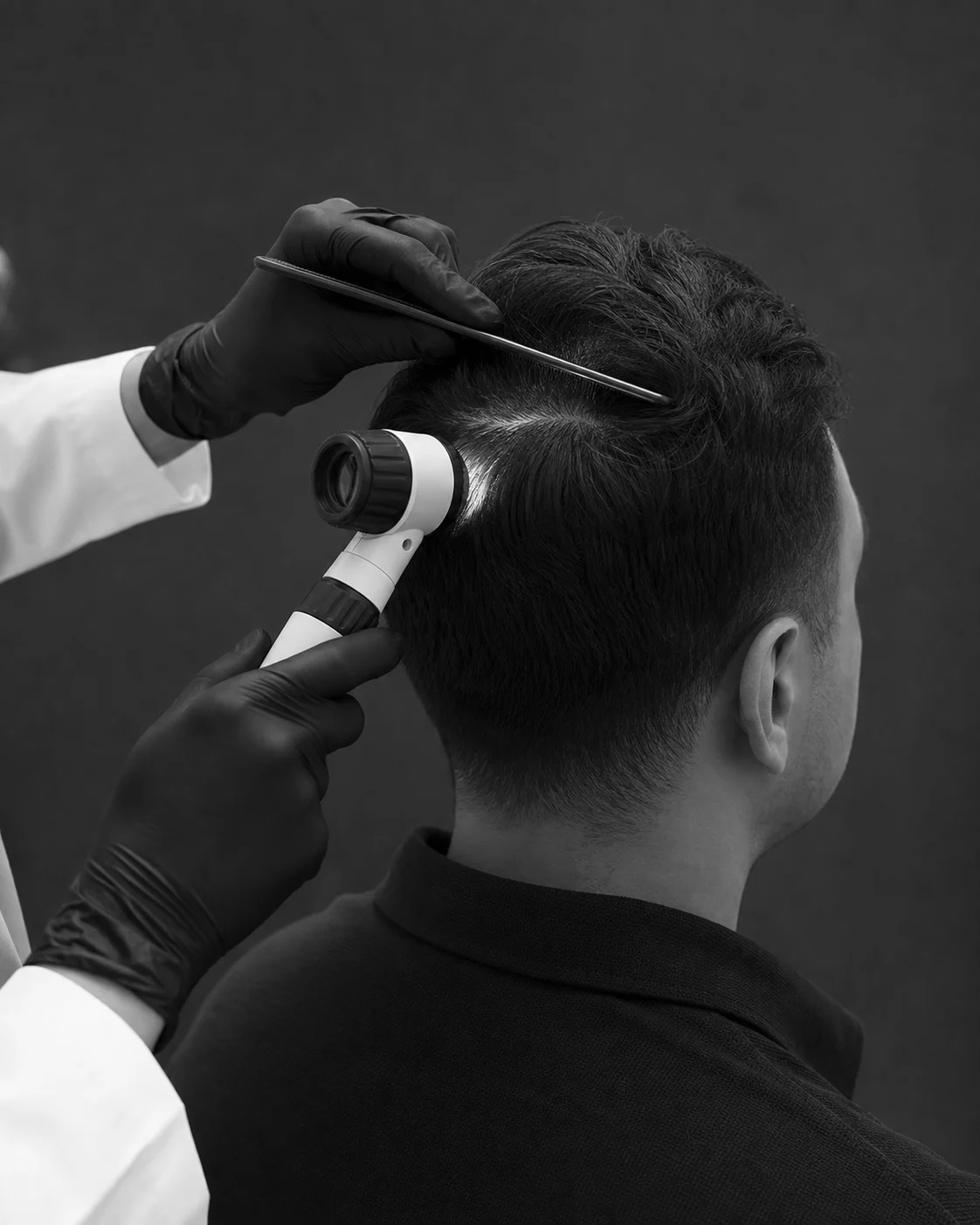
The Luxury approach
01 — UnderstandAndrogenetic alopecia can affect men and women, but not all hair loss is genetic. Shedding disorders, inflammatory or autoimmune disease, hormonal changes, medicines and deficiencies may create similar patterns. Treating or transplanting before identifying the cause can delay appropriate care.
The consultation addresses two separate decisions: how to preserve or improve existing hair and whether the donor area can support redistribution through transplantation. In both men and women, medical treatment may remain important even when surgery is considered because non-transplanted hair can continue to change.
This page provides guidance but does not diagnose or replace a consultation. The final recommendation depends on a professional assessment.
What we can assess
Each goal is reviewed separately to avoid unnecessary treatment and organize options with realistic expectations.
Differentiate male or female pattern loss from autoimmune, inflammatory, scarring or systemic causes.
Assess topical, oral or complementary procedures according to diagnosis, sex, age and reproductive context.
Review stability, donor area, surface to cover, design and density that can realistically be achieved.
Clinical assessment
A responsible consultation does not begin with a procedure. It begins by identifying needs, medical history, limitations and alternatives.
Talk with our team →Onset, speed, pattern, family history, medical conditions, medicines and recent events.
Scalp examination and trichoscopy for miniaturization, inflammation, scarring and density.
For women: pattern, menstrual cycles, pregnancy, menopause and signs that may justify hormone or iron evaluation.
For transplantation: donor density and caliber, recipient area, stability, design and long-term expectations.
Your experience
02 — SupportHistory and examination guide the type of alopecia and whether testing or dermatology referral is needed.
We consider male or female alopecia treatment to reduce progression and support existing hair when indicated.
If transplantation is of interest, we estimate donor resources, achievable coverage and future progression.
Consented clinical photographs and reviews help compare progression, tolerance and response.
Before deciding
Candidacy is not determined by a photograph or a trend. These are general guidelines and must always be confirmed during a consultation.
Safety and expectations
Medical treatments and transplantation serve different purposes. Selection depends on cause, pattern, general health and donor reserve.
Minoxidil, finasteride and other medicines have indications and adverse effects and are not suitable in the same way for everyone.
Medicines used in women require particular review during pregnancy, breastfeeding or the possibility of pregnancy.
A transplant may cause bleeding, infection, scarring, temporary shedding or a result below expectations and requires aftercare.
Transplanted hair takes months to grow; outcome depends on diagnosis, technique, graft survival, donor area and future progression.
Frequently asked questions
03 — Answer questionsNot always. They may share mechanisms, but pattern, associated causes, hormonal context and medication options require different assessment.
Yes, some women can be candidates. The diagnosis must be confirmed and there must be enough healthy, stable donor hair.
No. It redistributes donor follicles. Non-transplanted hair can continue to thin, so treatment and follow-up are often considered.
No. Tests are requested when history or examination suggests anemia, thyroid or hormonal changes, deficiencies or another systemic cause.
Transplanted hair commonly sheds first and then grows gradually. The American Academy of Dermatology notes that many patients see results between six and nine months, while some need twelve.
Medical sources
We select references from health authorities and medical organizations. Indications and authorizations applicable in Mexico should be confirmed with COFEPRIS.
Informational content reviewed July 31, 2026. FDA references describe regulation and safety in the United States; local availability and authorization of products, devices and procedures must be verified in Mexico.

Location and appointments
Visit us in Cabo San Lucas for a personalized assessment. We work by appointment so our team can dedicate the right time to your history, goals and questions.
Luxury Medical Spa · Cabo San LucasCalle Morelos, Mza. 218, Lote 02 · Col. Ejidal, Cabo San Lucas, B.C.S.Next step
Tell us what you would like to improve. An assessment lets us explain whether there is an appropriate option, what to expect and which alternatives are available.
Book through WhatsApp ↗