Individual design
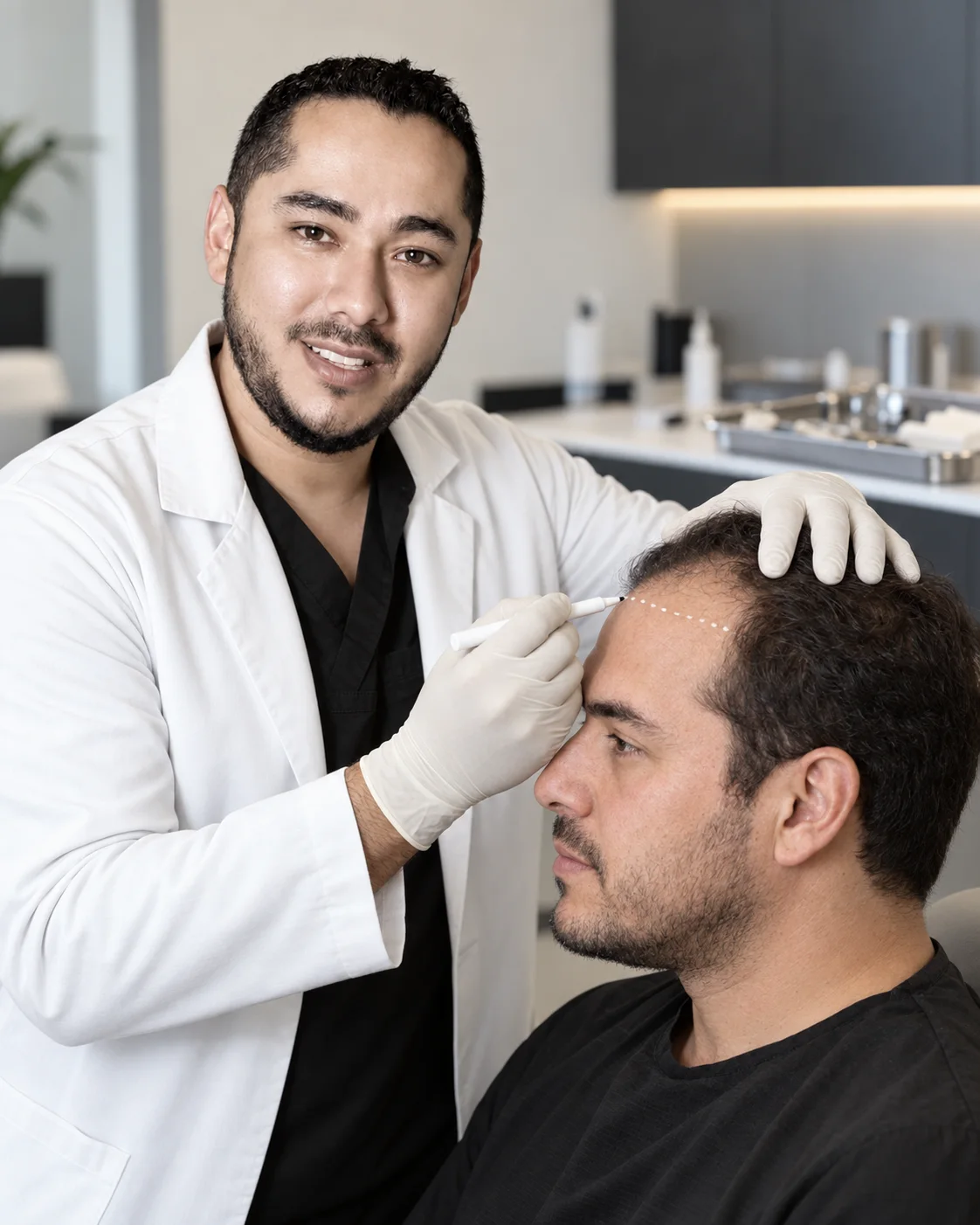
Plan the hairline, distribution and direction around age, anatomy, pattern and donor reserve.
 Book a consultation on WhatsApp
Donor area · FUE extraction · Specialized implantation
FUE removes follicular units individually and redistributes them through a design that respects the donor area, anatomy and future progression.
The Luxury approach
01 — UnderstandWith FUE, follicular units are harvested individually from a donor area and implanted into selected areas. It does not create new hair: it redistributes a limited reserve. Diagnosis, stability and long-term planning matter as much as the surgical technique.
We use specialized implanter pens for the placement stage when the plan calls for them. Our transplant instruments and supplies are sourced through United States providers; before use, we review origin, lot, package integrity, sterility and applicable documentation. During consultation, we can explain the brand and traceability of the materials planned for your case.
This page provides guidance but does not diagnose or replace a consultation. The final recommendation depends on a professional assessment.
What we can assess
Each goal is reviewed separately to avoid unnecessary treatment and organize options with realistic expectations.
Plan the hairline, distribution and direction around age, anatomy, pattern and donor reserve.
Estimate how many units may be removed without unnecessarily compromising appearance or future resources.
Use appropriate technique and instruments to handle grafts and place them with the planned direction and density.
Clinical assessment
A responsible consultation does not begin with a procedure. It begins by identifying needs, medical history, limitations and alternatives.
Book a consultation on WhatsApp →Diagnosis, stability and likely progression, including the plan for non-transplanted hair.
Donor density, caliber, distribution and skin characteristics; recipient-area size and condition.
Hairline design, estimated graft count, realistic coverage and the need to preserve future donor reserve.
Medical history, medicines, smoking, healing, preoperative testing and recovery instructions.
Your experience
02 — SupportWe confirm the diagnosis, donor area, goals, hairline and possible coverage before scheduling.
Follicular units are harvested individually with FUE instruments and prepared for temporary preservation.
Grafts follow the design; specialized implanter pens may help control placement depending on the case.
We provide donor- and recipient-area care and review progression during the months of growth.
Before deciding
Candidacy is not determined by a photograph or a trend. These are general guidelines and must always be confirmed during a consultation.
Safety and expectations
No linear incision does not mean no scar or no risk. Each extraction leaves a small circular scar, and excessive harvesting can visibly thin the donor area.
Pain, swelling, bleeding, infection, folliculitis, altered sensation, visible scarring or temporary shedding may occur.
Graft survival depends on extraction, handling, time outside the body, implantation and aftercare.
Transplanted hairs commonly shed at first, with growth appearing gradually over several months.
Instruments, supplies, sterility and documentation are checked for their intended use; United States sourcing does not replace clinical indication or guarantee an outcome.
Frequently asked questions
03 — Answer questionsIt is the individual excision of follicular units with small punches. The grafts are then prepared and placed in the recipient area.
They are instruments designed to place follicular units. Technique depends on the graft, area, design and team experience; an implanter does not replace planning or guarantee density.
Yes. The clinic sources transplant instruments and supplies through United States providers and reviews origin, lot, package integrity, sterility and applicable documentation before use.
Growth is gradual. The American Academy of Dermatology notes that many patients see results between six and nine months, while some need about twelve.
No. It redistributes donor follicles; non-transplanted hair may continue to thin and can require treatment and follow-up.
Medical sources
We select references from health authorities and medical organizations. Indications and authorizations applicable in Mexico should be confirmed with COFEPRIS.
Informational content reviewed July 31, 2026. FDA references describe regulation and safety in the United States; local availability and authorization of products, devices and procedures must be verified in Mexico.

Location and appointments
Visit us in Cabo San Lucas for a personalized consultation. We work by appointment so our team can dedicate the right time to your history, goals and questions.
Luxury Medical Spa · Cabo San LucasCalle Morelos, Mza. 218, Lote 02 · Col. Ejidal, C.P. 23470, Cabo San Lucas, B.C.S.Next step
Tell us what you would like to improve. A consultation lets us explain whether there is an appropriate option, what to expect and which alternatives are available.